QA Testing Services for SaaS Startups: How Vervali Works
How Vervali tests a SaaS startup's product: what to test first, when to outsource, manual or automation, the monthly cost at published rates, and how the free pilot…
Protect your applications, APIs, cloud environments, and infrastructure with Vervali’s VAPT services. We combine automated scans, manual penetration testing, and risk analysis to identify vulnerabilities and strengthen your security posture.

ISO/IEC 17025:2017Accredited testing laboratory

CMMI Maturity Level 3The process is written down and repeats

ISO 9001:2015Quality management

ISO/IEC 27001Information security
Every new app, API and integration widens the attack surface faster than most teams can review it.
Applications, APIs, cloud services, remote access and third-party integrations keep widening what an attacker can reach.
Authorisation flaws, insecure sessions, vulnerable components and business logic issues put sensitive data at risk.
Enterprise buyers, regulators, auditors and investors now expect hard evidence of your security controls.
Development and IT teams rarely see which risks across the estate an attacker could actually exploit.
One engagement across every layer you name, from customer-facing apps to the cloud accounts behind them.
SaaS platforms, portals, ecommerce sites and internal systems tested for access control flaws, injection, session weaknesses and business logic issues.
Android and iOS builds checked for insecure storage, weak authentication, reverse engineering exposure and insecure traffic. Deeper work runs through mobile security testing.
REST, SOAP, GraphQL and third-party APIs tested for broken object-level authorisation, data exposure and missing rate limits. See API security testing.
External and internal networks probed for vulnerable services, weak protocols, segmentation failures and privilege escalation. See network security testing.
AWS, Azure and Google Cloud reviewed for identity risks, exposed storage, excessive permissions, insecure networking and logging gaps.
Tenant isolation, role permissions, admin controls and data separation verified, so one customer can never reach another’s data.
Source reviewed for insecure patterns, vulnerable dependencies, embedded credentials, weak input validation and flawed cryptography.
Servers, firewalls and radio networks covered through infrastructure and wireless security testing.
Testing tied to product releases, major infrastructure changes and cloud deployments, not a once-a-year snapshot.
A scanner lists possibilities. A VAPT proves which ones matter.
Free Attack-Surface CheckAgreed in writing up front, ending with proof that every fix holds.
Target assets, environments, limits, critical functions and contacts agreed in writing before any testing starts.
Domains, applications, APIs, exposed services and cloud resources mapped to find the likely attack paths.
Automated scans for known vulnerabilities, misconfigurations, outdated components and exposed services.
Controlled testing of authentication, authorisation, sessions, business logic, APIs, infrastructure and cloud controls.
Findings ranked by exploitability, severity, affected data and business impact, with clear steps to fix.
Fixed issues retested, with closure evidence for engineering, compliance, customers and leadership.
Fewer false alarms, faster fixes and the evidence buyers and auditors ask for.
Exploitable vulnerabilities separated from low-value alerts and false positives, so engineering time goes where it counts.
Weaknesses found before a new application, feature, integration or platform update reaches customers.
Internet-facing assets, internal systems, APIs, cloud infrastructure and sensitive workflows hardened together.
Findings mapped to SOC 2, ISO 27001, PCI DSS and HIPAA requirements where they apply. Control-level work runs through compliance testing.
Reproduction steps, root cause and a practical fix for every finding, written for the engineer who owns it.
Closure evidence that answers customer security questionnaires and moves procurement reviews forward.
Real VAPT engagements, anonymized by sector, each closed out with a retest.
Bank · VAPT and audit evidence
Before: vulnerability noise was burying the work that mattered, fixes took over 40 days and audit preparation took five days. After: 68% less vulnerability noise, time to fix under 16 days, audit preparation down from 5 days to 5 hours, and high-risk findings closed 3.5 times faster.
68% less vulnerability noiseTime to fix 40+ days to under 16Audit prep 5 days to 5 hours3.5x high-risk closureInfrastructure VAPT across the exposed surface of a digital recharge and payments platform, using Burp Suite, Metasploit, Tenable, OpenVAS and Wireshark.
Web and infrastructure VAPT for a global marine technology organisation, tested against the OWASP Top 10 with risk-ranked findings.
API VAPT on a fintech platform, focused on authorisation between accounts, the flaw class automated tools most often miss.
End-to-end VAPT across web, mobile, API, source code and infrastructure, with MobSF and Frida on mobile and one retest.
Independent testers focused on real-world risk, clear fixes and evidence your stakeholders accept.
Specialists work through workflows, permissions, APIs and business logic by hand to find what automated tools miss.
Web, mobile, APIs, cloud, networks, source code and SaaS platforms assessed under a single scope and report.
Each issue prioritised by exploitability, the data it exposes, operational impact and business consequence.
An executive summary of business exposure, plus technical detail developers can reproduce and fix.
Testers who work alongside your developers, DevOps, cloud, QA and security stakeholders, in your tools.
Project-based, annual, release-based, continuous or dedicated security testing support, scoped to your needs.

OUR BLOGS

How Vervali tests a SaaS startup's product: what to test first, when to outsource, manual or automation, the monthly cost at published rates, and how the free pilot…
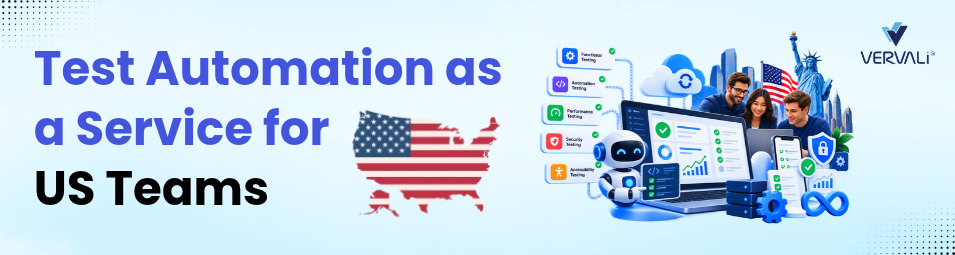
Vervali offers test automation as a service: framework, suite, CI integration and maintenance on a monthly allocation, from India with a 9am to 1pm Eastern overlap.

Vervali publishes what Shopify and ecommerce testing costs: hourly rates by role, monthly billing for a dedicated tester or retainer, a fixed price for a pre-peak lo…
Every path through a use case becomes at least one test case. A worked bank-transfer example shows the test table, and ISTQB's 2023 and 2025 syllabus changes explain…
What a soak test is, how it differs from load, stress and spike tests, how long to run it, the metrics that decide a pass, and how JMeter, k6 and Gatling hold a load…
This software testing checklist groups every item by the phase of the test process it belongs to, marks the items teams routinely skip, and shows how to wire the lis…
This guide explains what a QA maturity assessment scores you against, what the deliverable looks like on the last day, and when advisory work is the wrong purchase.
This guide explains what mobile app testing services cover, how to size a device matrix from United States traffic data, and what Apple and Google check before a rel…

Our Expertise


Trusted by 150+ Leading Brands

A Strong Team of 275+ QA and Dev Professionals

Worked across 450+ Successful Projects
 Email Us
 Call Us
From flawless code to flawless quality - we design, develop, and test digital solutions that deliver real results.